Bathroom
Best Shower Filter for Hard Water: What It Can and Can't Do
By Axilla Team · · 3 min read
In many Indian cities — Bengaluru, Delhi NCR, Chennai, Jaipur and much of Gujarat among them — the water reaching your bathroom is hard (rich in dissolved calcium and magnesium), chlorinated by the municipality, or both. If your soap barely lathers, taps and tiles get white crusty marks, and your hair feels dry and rough after a wash, water quality is a likely reason.
Hard water vs chlorinated water
- Hard water carries calcium and magnesium. It leaves scale on taps, shower heads and tiles and makes soap and shampoo harder to rinse off.
- Chlorine is added to municipal supplies to make water safe. It can leave a smell and may dry out skin and hair for some people.
- Borewell and tanker water often brings sediment, rust or a metallic smell, on top of hardness.
What a shower filter can do
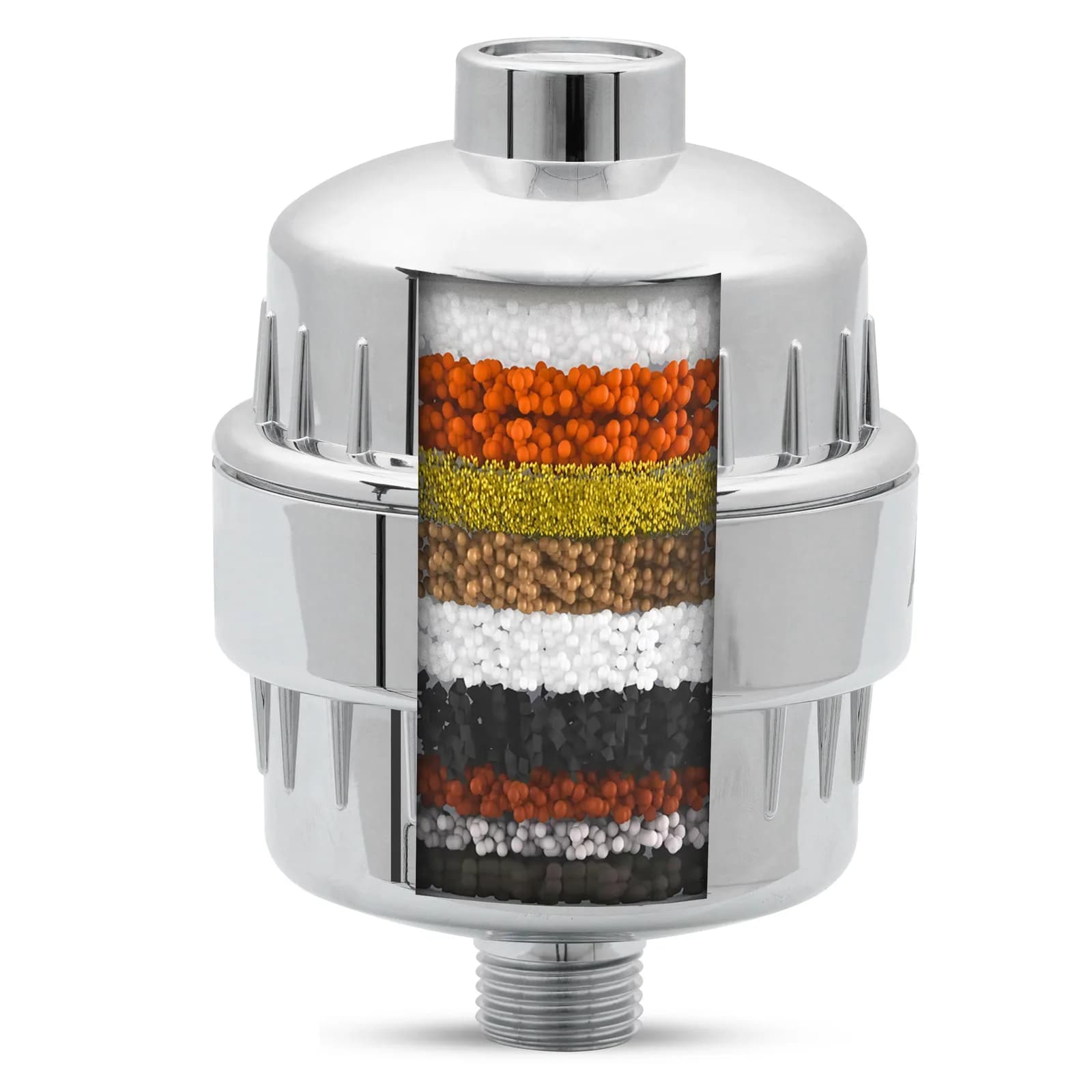
A multi-stage shower filter screws in between the shower arm and the shower head and passes water through several layers. Depending on the media inside, it can:
- Reduce chlorine and its smell (typically using KDF granules, calcium sulfite and/or activated carbon).
- Trap sediment, rust and loose particles, so less grit reaches your skin and the shower head.
- Make the shower feel softer for many people, especially where chlorine is the main problem.
What a shower filter can't do
This is the part many listings skip: a compact shower filter does not truly soften water. Removing calcium and magnesium needs an ion-exchange water softener, usually installed for the whole bathroom or home. A shower filter may reduce some scale build-up, but if your water is very hard (TDS well above 500 ppm, or heavy white scale within weeks), a softener is the real fix.
Tip: Not sure how hard your water is? A low-cost TDS meter gives a rough reading, and many water-purifier companies offer hardness tests.
How to choose a shower filter
- Stages and media: check which layers it has (sediment mesh, KDF, calcium sulfite, activated carbon, vitamin C, etc.) and match them to your problem.
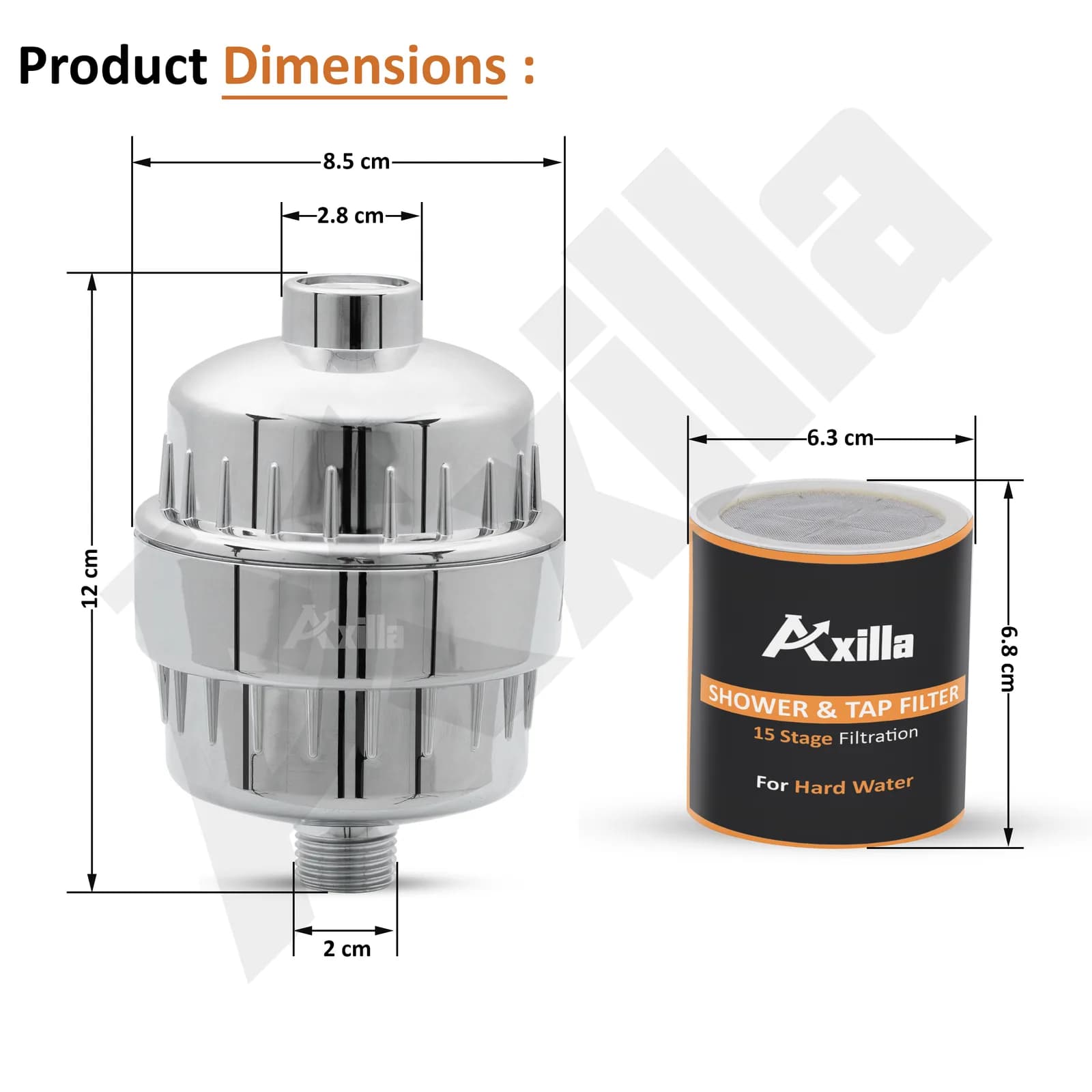
- Fit: most Indian shower arms use a standard ½-inch thread — confirm the filter's fitting and keep the washers it comes with.
- Cartridge life: filters have a limited capacity. Know how long a cartridge lasts and whether replacements are available.
- Flow: a good filter shouldn't noticeably reduce water pressure. Low-pressure homes should look for a slimmer, low-resistance design.
- Build: a metal or chrome finish lasts longer and looks better in the bathroom.
Installing and maintaining it
- Unscrew the shower head, wrap the shower arm thread with plumber's tape, screw on the filter, then refit the head.
- Run water for a minute before the first use to flush loose particles.
- Replace or clean the cartridge on schedule — an exhausted filter stops working and can restrict flow.
- Descale the shower head every few months with a vinegar soak if you have hard water.
Used for what it's good at — chlorine, smell and sediment — a shower filter is an inexpensive upgrade that many families notice from the first wash. For heavy hardness, pair it with a softener.
Frequently asked questions
- Does a shower filter remove hardness from water?
- Not fully. Shower filters mainly reduce chlorine, smell and sediment. Removing calcium and magnesium needs an ion-exchange water softener.
- Will a shower filter fit my shower?
- Most Indian shower arms use a standard ½-inch thread that fits common shower filters. Check the fitting details on the product page before ordering.
- How often should I change the shower filter cartridge?
- It depends on your water and usage. Follow the filter's recommended capacity and change it sooner if the water smell returns or flow drops.
- Does a shower filter reduce water pressure?
- A well-designed filter shouldn't reduce pressure noticeably. If pressure drops over time, the cartridge may be clogged and due for replacement.
Browse: Shower filters · Bathroom accessories